From CMS to Collection Manager: An Interview with Toby Dodds on Orchard Core at Smithsonian Folkways

“Our CMS is not just a web-publishing platform — it’s evolved to become our collection manager.” Smithsonian Folkways runs a 75,000-track archive on Orchard Core. Director of Technology Toby Dodds shares how they moved from Orchard 1.x to Core, and turned their CMS into a mission-critical platform.

How do you manage a musical archive with 75,000+ tracks, complex metadata, and a mission to keep every recording available forever? For Smithsonian Folkways, the answer began over a decade ago with Orchard 1.x, and today runs on a fully customized Orchard Core platform.

Smithsonian Folkways is the nonprofit record label of the U.S. national museum system — a digital home for musical traditions from across the globe. When their team first needed a scalable, flexible platform, Toby Dodds, Director of Technology, was referred to Lombiq by a fellow Orchard community member to help build it.

We talked to Toby about how their platform evolved over the years, what made Orchard the right long-term choice, and what others might learn from building and running something this complex and essential.
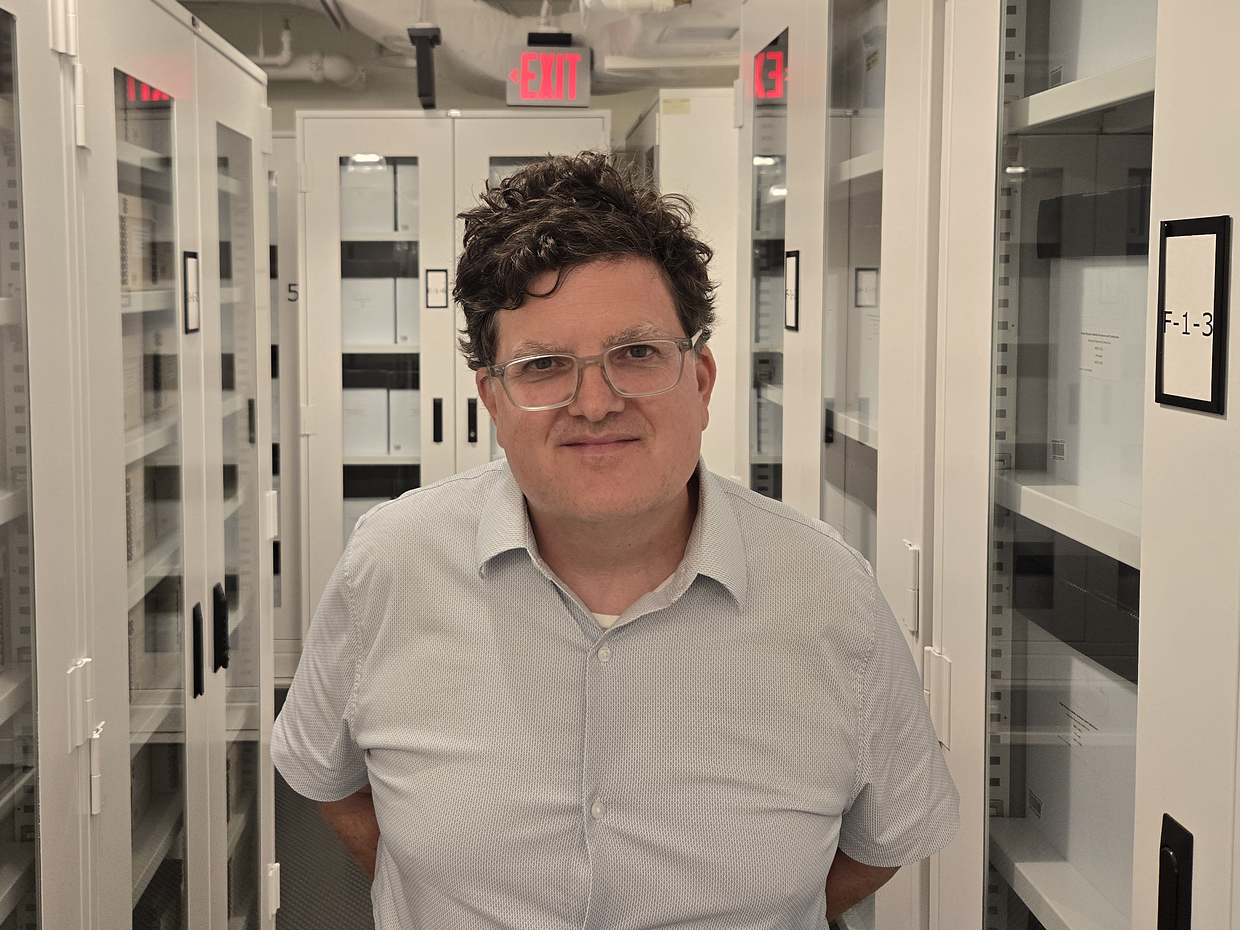

– Toby, can you give us a quick overview of what Folkways does, and why managing the platform is such a complex technical challenge?

Toby: Smithsonian Folkways Recordings is a record label based within the Smithsonian Institution in Washington, D.C.

It was founded in 1987 when the Smithsonian acquired Folkways Records, with a promise to keep the entire catalog in print in perpetuity. It had over 2,000 titles back then.

Today, it features closer to 4,000 releases with around 75,000 tracks of audio. The recordings in the collection are historic and diverse, with a strong emphasis on musical traditions from around the world.

Keeping this catalog of high-value material in print — both physically and digitally — requires a powerful website and a capable CMS to support it.

– So back when you were first planning the site, what made you go with Orchard? What were you looking for that led you there?

Toby: To meet our mission of keeping our catalog in print, we knew we needed a website capable of giving users access to our catalog with working search and many thousands of pages that feature rich media.

We also knew we would have to store complex metadata to make the website and our operation function.

When CMS technologies were emerging, we reviewed many projects but concluded that the Orchard CMS would best fit our needs.

Building on ASP.NET has always felt like a steady and reliable option for us — it allowed us to do powerful things without too much cost and on a reasonable upgrade path.

We liked the transparency and size of the Orchard community because it gave us easy access to it. Fundamentally though, Orchard was best because we would be able to design our own architecture within it without painful compromises.

– You’ve been on Orchard for a long time now. What made you stick with it when moving to Orchard Core, instead of switching to something else?

Toby: Preserving control over our collection, and executing our mission, superseded any other concerns about platform selections we’ve faced.

Our website is unique in its requirements, and we couldn’t be happier with our choice of Orchard Core.

Our CMS is not just a web-publishing platform — it’s evolved to become our collection manager. From content management to collection management — which for a museum-based organization is an important distinction.

Our ability to house collection records securely within Orchard and immediately make them available to the public via our website hits a very sweet spot for us.

– What were the biggest improvements or benefits you noticed after moving to Orchard Core?

Toby: Speed was the biggest upgrade we felt in transition to Core.

But along the way we solved a slew of big problems and were able to roll out new capabilities — including offering streaming of our catalog directly to our users.

We were also able to massively improve our search and browsing interfaces by leveraging the indexing architecture at the core of Core.

– And how did the new system change the way your team works day to day?

Toby: Working step-by-step, we have continued to add new capabilities to our Orchard Core implementation and are strengthening the role it plays in our organization.

Recently we added Audit Trail capabilities, for example, to make it possible to safely share the collection management project with a wider group.

– Sounds like it’s really grown into more than just a CMS. What kind of role does it play today?

Toby: We have branded our Orchard Core implementation with the name FCM, which stands for Folkways Collection Manager, and it is our system of truth for our collection.

It is at the center of nearly everything we do related to maintaining our catalog as a business and as an educational archival project.

We interact with it in too many ways to list, but there is no limit to the powerful things we feel we can do through programming in ASP.NET and Orchard.

– So where do you feel Orchard Core really shines? What makes it stand out for you after all these years?

Toby: We see Orchard Core as highly flexible, powerful, affordable, and fast.

We feel that extending its features through custom module development in ASP.NET allows us to do anything we can dream up.

We also like the fact that version changes are easier to accommodate, as Microsoft tends to respect the need to support legacy technologies for a longer period than the alternative PHP-centric projects.

We hope to be using Orchard Core as our platform for a good five to ten years — maybe more!

– If you could change or improve one thing in Orchard Core based on your experience, what would it be?

Toby: Getting the development environment up and running is tricky at times, and I’ve gotten quite stuck just getting going.

There’s a learning curve — but that’s true for any platform — and Orchard concepts align closely to ASP.NET ones, so finding help is never difficult.

Thankfully, Lombiq has been there to hold our hands for years now.

There’s no question that to use Orchard Core you need to have a good amount of experience with ASP.NET and/or access to developers like Lombiq to help you — ideally both.

– You’ve been part of the Orchard Core community for a while now. What’s your experience been like with it over the years?

I honestly feel guilty that I haven’t made more of the regular meetings. I’d like to feel more connected to it.

I appreciate Lombiq’s help organizing and connecting people within the community as well. It’s such amazing technology — it sells itself really — but I get the sense it could use more evangelists.

– You’ve worked with Lombiq for quite a while now. What made us the right fit back then — and what’s kept you coming back all these years?

Toby: Lombiq has for some time now been the strongest vendor in the Orchard space.

We are loyal to the quality of the work they do and happily recommend them to others.

They are very passionate and kind people — a pleasure to work with.

– What would you tell other organizations that are considering Orchard Core or thinking about working with Lombiq?

Toby: If you are passionate about your work and determined to deploy technologies that cater specifically to your vision without compromise, then you must invest in design and technologies that are flexible and robust.

Orchard Core development on the ASP.NET platform is a safe and sound investment that aims you in the direction of success at a manageable cost and with the promise of nothing being impossible.

Smithsonian Folkways is considered one of the great folk music record labels, and that success is driven by our ability to share our recordings in our own unique way.

Orchard Core empowers us to achieve our goals — supporting our website while providing the backend capabilities we need to succeed in our business.


Thanks to Toby for sharing this behind-the-scenes look at how Smithsonian Folkways built and evolved a platform that does so much more than power a website.


His story is a reminder that with the right tools — and the right team — Orchard Core can become a core part of how organizations work, grow, and deliver on their mission.


Want to build something like this? Contact us to talk through how we can help.

Other recent posts

Integrate Microsoft login into your ASP.NET Core or Orchard Core application with ease

Why create separate accounts in different systems when you can use a single, trusted source for all of them?

Instead of asking people to create yet another account, you can let them sign in with the Microsoft account they already use at work. This can be a Microsoft 365 account or an account managed through Microsoft Entra ID.

For users, this feels familiar. For administrators, it keeps account management closer to the systems they already use every day.

Managed CMS Hosting Now Available in the Microsoft Marketplace — Powered by DotNest

Microsoft customers worldwide can now discover and use DotNest, a fully managed website hosting platform, through Microsoft Marketplace, accessing trusted solutions that accelerate innovation and business transformation with unified integration across Microsoft productsBudapest, Hungary — June 23, 2026 — Lombiq Technologies today announced the availability of DotNest, a fully managed content management and website hosting platform, in the Microsoft Marketplace, the unified online destination for customers to buy trusted cloud solutions, AI apps, and agents to meet their business needs. DotNest customers can now discover and deploy trusted solutions through Microsoft Marketplace, with smooth integration and streamlined management across Microsoft Azure and other Microsoft products.DotNest is the only fully managed hosting service for Orchard Core, the open-source, modular content management system (CMS) framework built on ASP.NET Core. Built and operated by Lombiq Technologies, a major contributor to the Orchard project for more than a decade, DotNest brings enterprise-grade Orchard Core hosting to organizations without the complexity of running their own infrastructure. Today, DotNest powers more than 6,000 websites worldwide.DotNest delivers Orchard Core as a fully managed SaaS on Microsoft Azure, removing the infrastructure burden of server management, security patching, and version upgrades. Now available in the Microsoft Marketplace, organizations can procure DotNest directly through their existing Azure subscription and manage their websites from the Azure Portal alongside their other cloud resources. Key capabilities include:Zero technical maintenance: Hosting, monitoring, and platform updates are handled automatically so teams can focus on building, not operating.Native Azure integration: Sites are provisioned and managed from the Azure Portal, backed by Azure security, point-in-time backups, HTTPS, and geo-redundant storage.Complete design freedom: Full Orchard Core customization is preserved, with automatic theme deployment from source control and support for custom content types and modules.Built-in ecommerce: Organizations can launch online stores using the integrated Orchard Core Commerce suite without additional platform setup.Enterprise performance: Optimized infrastructure with CDN, caching, Elasticsearch, and email delivery requires no infrastructure configuration from the customer.GDPR compliance: DotNest is compliant out of the box with privacy-focused defaults suited for EU organizations.The offering is designed for IT teams looking to reduce infrastructure overhead, marketing teams that want to launch and update web properties without depending on development cycles, and digital agencies that prefer to focus on customization rather than operations. "Bringing DotNest to the Microsoft Marketplace is a natural step for us,” said Zoltán Lehóczky, Co-Founder and managing director of Lombiq Technologies. “We have spent over ten years building DotNest and contributing to Orchard Core itself. Listing in the Microsoft Marketplace means any Microsoft customer can now provision a fully managed Orchard Core site in minutes, using the same Azure subscription they already rely on for everything else, no separate procurement, no infrastructure work, and no compromise on the flexibility of the open-source platform.” “Microsoft Marketplace helps organizations and partners move faster, work smarter, and grow by connecting them with the right solutions—all in one trusted place,” said Cyril Belikoff, vice president, Microsoft Azure Product Marketing. “We’re happy to welcome Lombiq Technologies’ DotNest solution to the growing Microsoft Marketplace ecosystem.” Microsoft Marketplace is a single destination to find, try, and buy trusted cloud solutions, AI apps, and agents to meet your business objectives. Choose from a growing collection of solutions tailored to your unique needs, available both in Marketplace and directly within Microsoft products. DotNest is available now in the Microsoft Marketplace at https://marketplace.microsoft.com/en-us/product/saas/lombiq.dotnest-production. To learn more about DotNest, visit https://dotnest.com. Lombiq Technologies is a software, training, and services company focused on web development with open Microsoft technologies, predominantly the Orchard Core content management system. With more than a decade of contributions to the Orchard Core ecosystem, Lombiq provides custom development, training, consulting, and hosting services to clients worldwide. The company is the team behind DotNest, the only Orchard Core SaaS. Learn more at https://lombiq.com. For more information, press only: Lombiq Crew, Lombiq Technologies, [email protected]

Long-term Orchard Core maintenance for the City of Santa Monica

Back in 2021, we wrote about helping the City of Santa Monica move santamonica.gov from Orchard 1 to Orchard Core. Since then, we have continued working with the City's team.

In the last couple of years, much of that work has been maintenance: upgrading Orchard Core, improving tests, making local development easier, cleaning up the codebase, and fixing performance issues.

The Orchard Core upgrade was an important part of this. Keeping the CMS version current helps the site stay on a safer and better-supported foundation. It also brings in fixes from Orchard Core itself, including fixes for issues that could otherwise affect users, editors, or developers.

The other changes support the same kind of work. Automated tests help catch problems before deployment. Auto Setup makes local development more predictable. Static analyzers, codespell, and Renovate make the codebase easier to maintain. 

Most of this is not visible from the outside, but it is important for keeping a long-running website working well.

Rebuilding DotNest.com: Orchard Core, Tailwind 4, and a more maintainable workflow

DotNest is Lombiq’s managed Orchard Core hosting platform where users can create and run Orchard Core sites without handling infrastructure, updates, or maintenance themselves. We recently rebuilt the site to give DotNest a clearer presentation and a more modern user experience. By looking behind the scenes of the DotNest site rebuild, you’ll see how a website redesign can become a broader modernization project: improving how landing pages are structured, introducing Tailwind 4 into an Orchard Core front-end workflow, simplifying asset handling, and using AI-assisted tools in a practical way while keeping developers in control. Why the rebuild mattered The previous site served its purpose, but it no longer matched what we envisioned for DotNest. Beyond a more modern design, we needed clearer messaging, and a content management structure that would be easier to maintain as the site evolved. This was especially important because DotNest is more than a marketing website. It also reflects how we approach building maintainable Orchard Core platforms. If the site itself is hard to update, every future improvement becomes slower and more expensive than it should be. So we treated the rebuild as more than a visual refresh. It became a chance to rethink the site’s structure, front-end workflow, and development process in a way we can reuse on future Orchard Core projects. Building landing pages around reusable sections One of the main changes was how landing pages are structured in Orchard Core. Previously, the DotNest pages used simple Liquid widgets for page sections. This was quick and flexible while most changes were made directly by developers, but it also meant that the page structure was less explicit and harder to evolve consistently over time. Around the same time, the Orchard Core community was also moving toward more reusable “Blocks”-style page structures, which aligned closely with the direction we already wanted to take for DotNest. The rebuild became a good opportunity to apply a similar pattern in practice. For the new site, each landing page section now has its own content type, and the sections are composed on the landing page through Orchard Core’s BagPart. This keeps the flexibility of section-based pages while giving each section a clearer structure and purpose. The result is a landing page system that is easier to understand, easier to extend, and less dependent on ad-hoc template changes. At the same time, the reusable section-based approach gives content editors flexibility within clear guardrails, making it much harder to accidentally break layouts or page structure. For a marketing site that will keep evolving, that maintainability matters as much as the initial design. Modernizing the front-end workflow The rebuild was also the point where we introduced Tailwind 4 into our internal front-end workflow for Orchard Core projects. Previously, we used a BEM-style approach with custom CSS files. While this worked well for years, it also created more manual structure and coordination as the site evolved. With Tailwind 4, we could build UI components faster, keep styling closer to the markup, and work more consistently with our design system. As part of the rebuild, we removed the old Node.js-based asset pipeline and integrated Tailwind directly into the .NET build workflow. That led to Lombiq Tailwind Targets, our open-source MSBuild integration for Tailwind CSS. With Lombiq Tailwind Targets, Tailwind compilation runs as part of the .NET build process, making the front-end workflow feel like a natural part of the Orchard Core application instead of a separate toolchain to maintain. This also aligned with a broader direction we had already started exploring at Lombiq: simplifying front-end tooling and moving away from Node.js-based workflows where they add unnecessary maintenance overhead. We wrote earlier about this approach in Step away from that Node.js. Using AI where it helps, with developers still in control AI-assisted tools became part of the rebuild mainly in the UI and front-end workflow. We used Magic Patterns to explore UI directions and generate Tailwind-based starting points from our design system. Since the generated code was not always aligned with Tailwind 4 or the final Orchard Core implementation, we still reviewed and refactored it before integrating it into the site. To support this workflow, we also created two open-source repositories: Tailwind Agent Skills and Orchard Core Agent Skills. These agent skill collections give AI tools more project-specific context around Tailwind 4, Orchard Core theming, content modeling, shapes, and recipes, making the output far more useful than generic prompting alone. The goal was not to automate development away, but to make AI-assisted work more practical and reviewable for real Orchard Core projects. AI helped speed up repetitive and exploratory tasks, while developers still made the architectural and implementation decisions needed to keep the final result maintainable. What we gained from the project One of the biggest takeaways was how much easier Orchard Core landing pages become to manage once reusable sections and clearer content structures are introduced. The previous setup had gradually accumulated friction over time, while the new approach already feels easier to extend and work with. The rebuild was also our first larger Tailwind 4 project, and it significantly changed how quickly we can build and adjust UI components. That experience directly led to Lombiq Tailwind Targets and helped shape how we want to handle front-end workflows in future Orchard Core projects. We also learned a lot about practical AI-assisted development. Working on a real-world project made it much clearer where AI tools actually help and where developer oversight still matters. That experience ultimately led to the Tailwind Agent Skills and Orchard Core Agent Skills repositories. Most importantly, we validated different development approaches for future Orchard Core websites. If you’re planning an Orchard Core website, a redesign, or a modernization project, reach out to us. We’re always happy to help teams build Orchard Core solutions that remain easy to evolve as requirements grow over time.